
- Empty cart.
- Continue Shopping

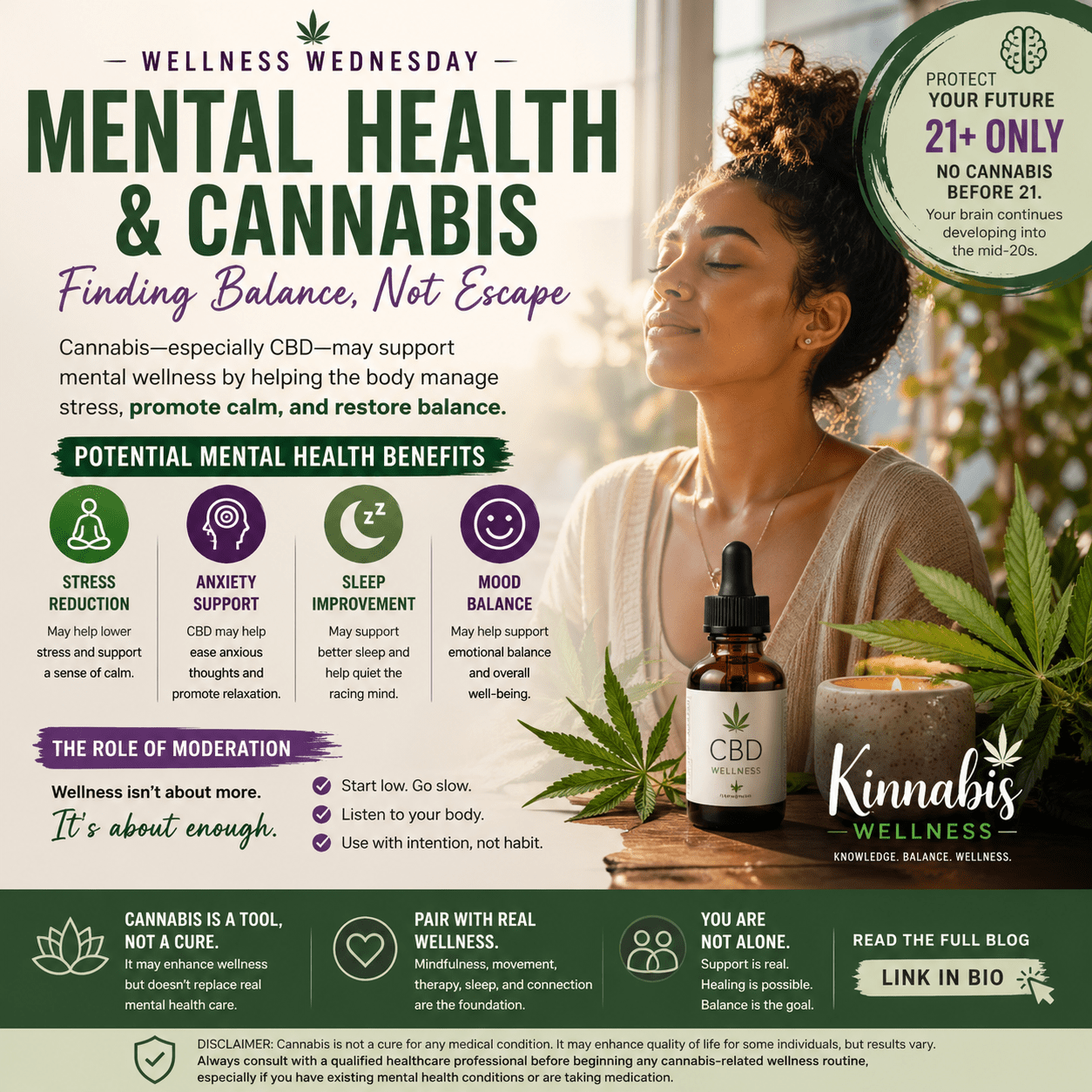
Mental Health & Cannabis: Finding Balance, Not Escape


6
🧠 The Conversation We Need to Have
Mental health is no longer a side topic—it’s central to how we live, work, love, and grow. Stress, anxiety, burnout, and emotional fatigue have become part of everyday life for millions. As the world searches for solutions, cannabis—particularly CBD—has entered the wellness conversation in a meaningful way.
But let’s be clear from the start:
Cannabis is not a cure. It is a tool. And like any tool, its impact depends on how, when, and why it’s used.
🌱 Understanding Cannabis & the Mind
The human body contains a complex system known as the endocannabinoid system (ECS)—a regulatory network that helps maintain balance (homeostasis) across mood, sleep, appetite, and stress response.
Cannabis compounds interact with this system:
- CBD (Cannabidiol): Non-intoxicating, often associated with calming effects
- THC (Tetrahydrocannabinol): Psychoactive, can elevate mood but may increase anxiety in high doses or sensitive individuals
For mental wellness, many individuals lean toward CBD-dominant or balanced formulations.
💭 Potential Mental Health Benefits
1. Stress Reduction
Chronic stress disrupts nearly every system in the body. Cannabis—especially CBD—may help regulate cortisol levels and promote a sense of calm.
2. Anxiety Support
Some users report reduced symptoms of generalized anxiety, social anxiety, and situational stress when using low-to-moderate doses of CBD.
3. Sleep Improvement
Mental health and sleep are deeply connected. Cannabis may assist individuals who struggle with falling or staying asleep due to racing thoughts or stress.
4. Mood Stabilization
In controlled, moderate use, cannabis may help some individuals manage mood fluctuations, offering temporary relief from emotional lows.
⚖️ The Role of Moderation
This is where wellness becomes responsibility.
Overuse—especially of high-THC products—can:
- Increase anxiety or paranoia
- Disrupt natural dopamine balance
- Lead to dependency patterns in vulnerable individuals
Wellness is not about more. It’s about enough.
A mindful approach includes:
- Starting low and going slow
- Tracking how your body responds
- Choosing intentional use over habitual use
🧬 Age & Brain Development Matters
The brain continues developing into the mid-20s. Early cannabis use—especially before age 21—has been associated with:
- Impaired cognitive development
- Increased risk of anxiety disorders
- Potential long-term changes in brain structure
Our stance is firm:
🚫 No cannabis use under 21 years of age.
Protecting mental health starts with protecting brain development.
📊 Looking at the Bigger Picture
Research into cannabis and mental health is ongoing. While early studies and user reports show promise, results vary based on:
- Individual biology
- Type of cannabis used
- Frequency and dosage
- Underlying mental health conditions
There is no one-size-fits-all approach.
🧘♂️ Cannabis as a Wellness Companion
The healthiest relationship with cannabis is one where it supports—not replaces—core mental health practices:
- Mindfulness and meditation
- Physical activity
- Therapy or counseling
- Strong relationships and community
Cannabis can complement these habits—but it should never substitute them.
🌟 Final Thoughts
Mental health is a lifelong journey. Cannabis, when used responsibly and intentionally, may offer support along the way—but the foundation of wellness will always come from within.
Balance. Awareness. Responsibility.
That’s the real path to wellness.
⚠️ Medical Disclaimer
Cannabis is not a cure for any medical condition. It may enhance quality of life for some individuals, but results vary. Always consult with a qualified healthcare professional before beginning any cannabis-related wellness routine, especially if you have existing mental health conditions or are taking medication.