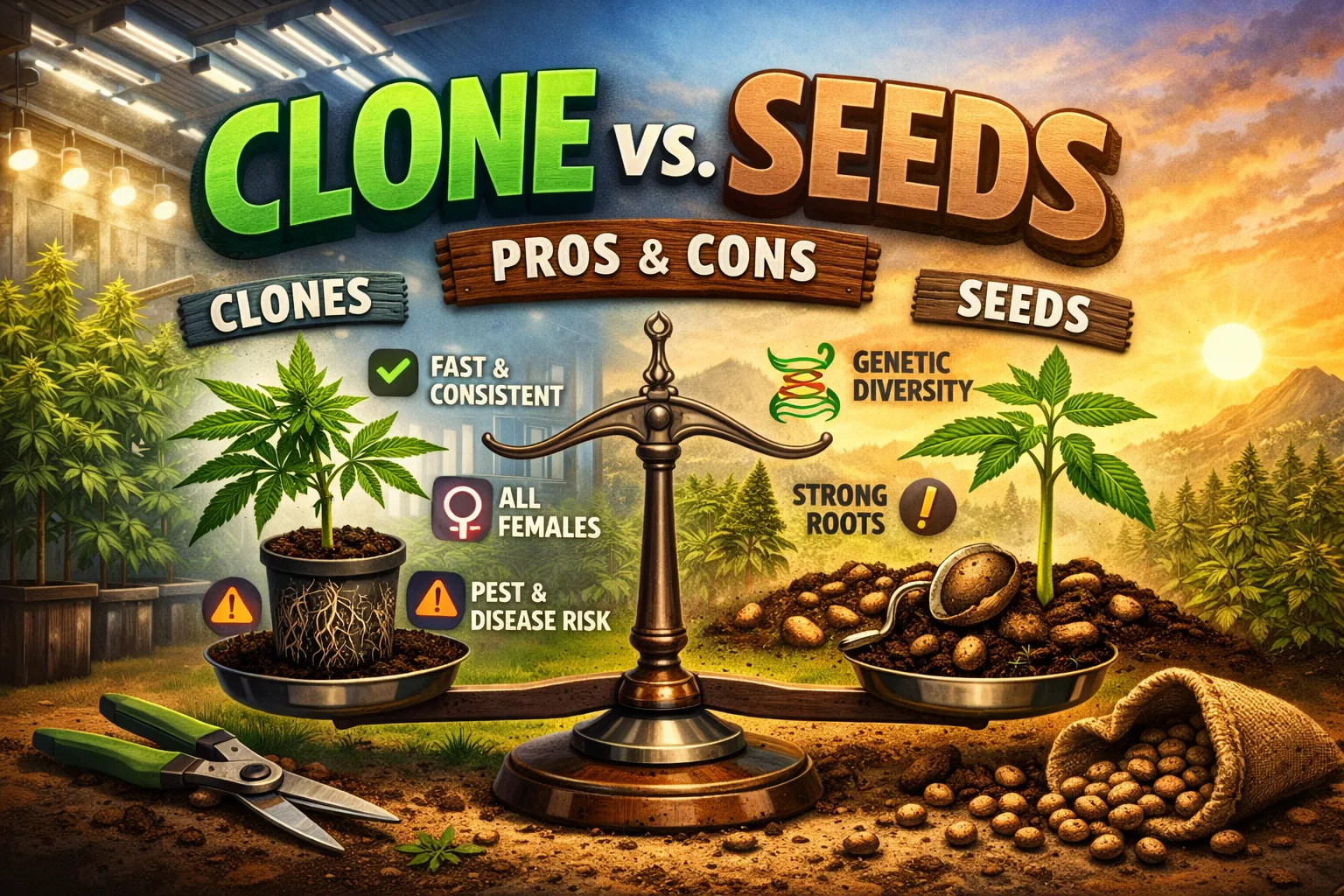
One of the first—and most important—decisions a cannabis grower makes happens before a single leaf forms: do you start from seeds or from clones?
Both paths can lead to exceptional cannabis. Both come with trade-offs. Understanding the benefits and drawbacks of each helps growers choose the method that fits their goals, skill level, and growing environment.
Let’s break it down.
Starting from Seeds
Cannabis seeds are nature’s original blueprint. Each seed contains a unique genetic expression waiting to unfold.
Benefits of Growing from Seeds
Genetic Diversity
Seeds offer variation. Even seeds from the same strain can express different traits—flavor, aroma, structure, and potency. For breeders and phenohunters, this diversity is gold.
Strong Root Development
Seed-grown plants develop a natural taproot, often resulting in stronger structural stability and better long-term nutrient uptake.
Lower Disease Risk
High-quality seeds are typically free from pests, pathogens, and viruses that can plague clones when hygiene isn’t perfect.
Long-Term Potential
Seed plants often grow more vigorously over time and can outperform clones in longer vegetative cycles.
Disadvantages of Growing from Seeds
Unpredictability
You won’t know exactly what you’re getting until the plant matures. Yield, potency, and structure can vary.
Sexing Required (Unless Feminized)
Regular seeds require time and space to identify and remove males, which can be costly for beginners.
Longer Start Time
Seeds take time to germinate and establish, adding days—or weeks—to the grow cycle.
Starting from Clones
A clone is a cutting taken from a mature female plant and rooted to create an exact genetic copy.
Benefits of Growing from Clones
Genetic Consistency
Clones deliver predictable results. Same strain, same structure, same cannabinoid profile—every time.
Faster Turnaround
Clones skip germination and juvenile stages, allowing growers to flower sooner and harvest faster.
Guaranteed Female Plants
No males. No surprises. Every clone is flower-ready once established.
Ideal for Commercial Grows
Uniform canopies and consistent harvests make clones the go-to choice for production-focused growers.
Disadvantages of Growing from Clones
Risk of Disease Transfer
Clones can carry pests, mold, or latent viruses from the mother plant if not properly managed.
Weaker Root Systems
Clones lack a taproot, which can affect long-term vigor if environmental conditions aren’t dialed in.
Dependence on a Mother Plant
Maintaining healthy mother plants requires space, time, and experience.
Limited Genetic Expression
While consistency is a strength, it also limits exploration and adaptation.
Which Is Better? It Depends on Your Goals
There’s no universal winner—only the right choice for the situation.
- Home growers and beginners often benefit from seeds due to cleanliness, resilience, and learning value.
- Commercial and experienced growers lean toward clones for speed, consistency, and repeatability.
- Breeders and craft growers favor seeds for innovation and unique phenotypes.
Many advanced growers use both—starting from seeds to find elite genetics, then cloning the best performers for future runs.
Final Thoughts
Clones offer control. Seeds offer potential.
Clones deliver efficiency. Seeds deliver discovery.
Understanding the strengths and weaknesses of each empowers growers to build smarter gardens and better harvests. Whether you’re chasing consistency or hunting the next legendary phenotype, the journey always starts at the root.