
- Empty cart.
- Continue Shopping
The Real Truth About Cannabis and Health: Separating Facts from Fiction
- Posted on
Kinnabis
- 0
- Categories: Health & Wellness
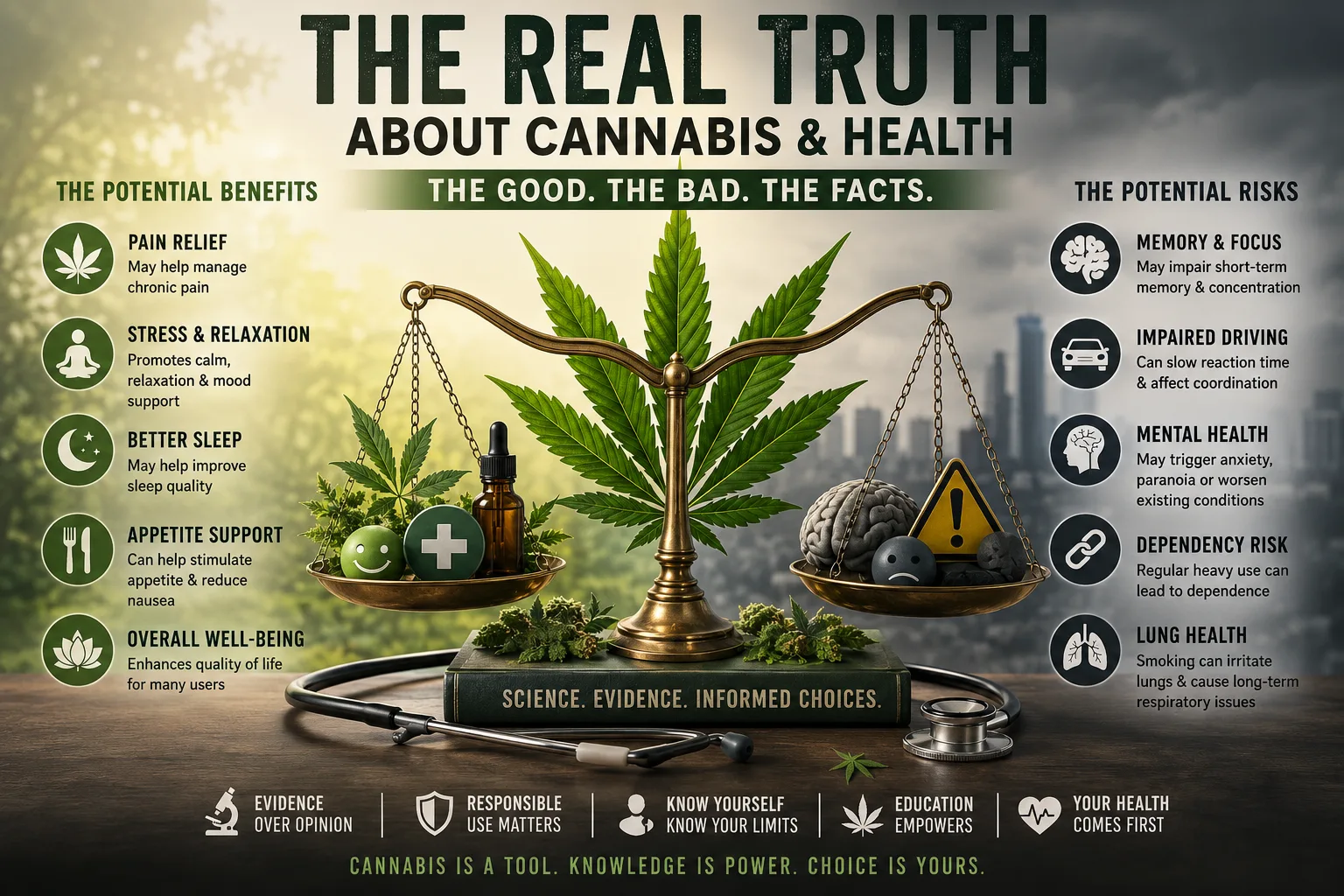
For years, cannabis has been surrounded by extreme opinions.
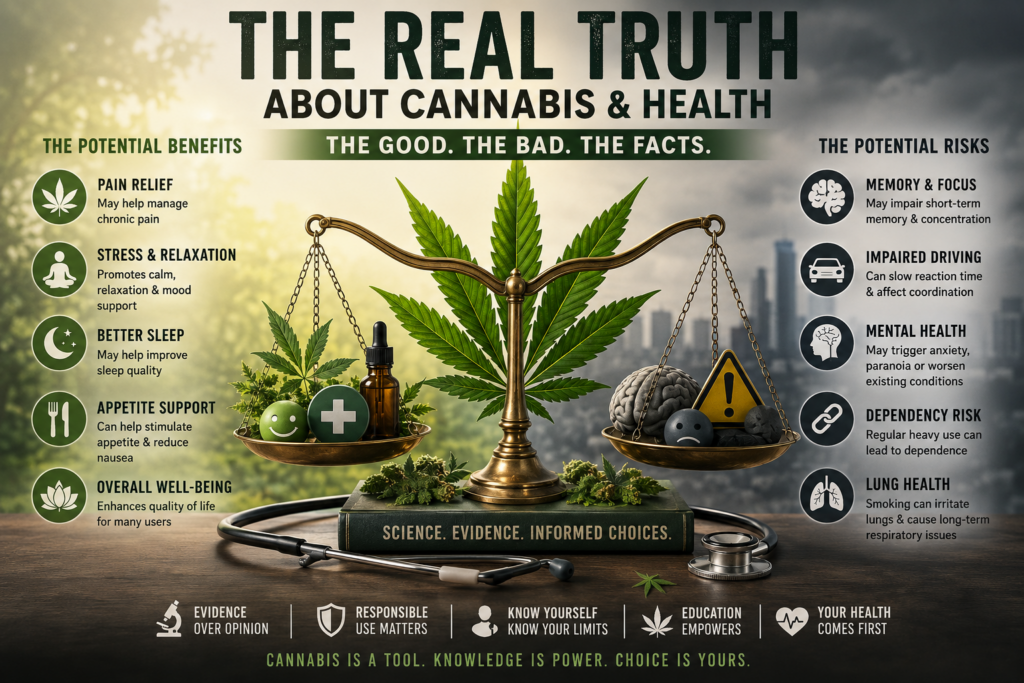
Some people claim cannabis is a miracle plant that can solve every problem under the sun. Others insist it is nothing but trouble waiting to happen.
At Kinnabis, we believe the truth matters more than the headlines.
So let’s set aside the myths, the politics, and the fear-based messaging and take an honest look at what science, research, and real-world experience tell us about cannabis and health.
The truth is simple:
Cannabis has benefits. Cannabis has risks. Both can be true at the same time.
Let’s explore what every cannabis enthusiast should know.
Cannabis Is More Popular Than Ever
Cannabis use has grown significantly over the last decade.
Millions of adults use cannabis for relaxation, wellness, recreation, sleep support, creativity, pain management, and countless other reasons.
As cannabis legalization expands and research continues, we are learning more than ever before about how cannabis affects the human body.
The result?
A much clearer picture than we had twenty years ago.
The Potential Benefits of Cannabis
Pain Management
One of the most studied benefits of cannabis is its potential role in helping individuals manage chronic pain.
Many adults report that cannabis helps reduce discomfort, improve mobility, and enhance overall quality of life.
While cannabis is not a cure for chronic pain, many people find it to be a useful tool in their wellness toolbox.
Relaxation and Stress Relief
Let’s be honest.
One of the biggest reasons people enjoy cannabis is because it helps them unwind.
After a long day, many users report feeling calmer, more relaxed, and less stressed.
For some people, this relaxation can contribute to improved overall well-being and a better quality of life.
Sleep Support
Sleep is one of the most important pillars of health.
Many cannabis users report that certain strains help them fall asleep faster and stay asleep longer.
Anyone who has spent a sleepless night staring at the ceiling understands how valuable quality sleep can be.
Appetite Support
Cannabis is well known for stimulating appetite.
For individuals struggling with appetite-related challenges, this effect can be beneficial and has been recognized in various medical settings for years.
The Risks Every User Should Understand
Being honest means talking about both sides of the story.
Cannabis is not risk-free.
Understanding those risks helps consumers make informed decisions.
Memory and Concentration
THC interacts directly with areas of the brain involved in memory, learning, and attention.
Short-term effects may include:
- Forgetfulness
- Reduced concentration
- Slower reaction times
- Difficulty multitasking
This is one reason many experienced users avoid consuming cannabis before activities that require intense focus.
Driving and Operating Machinery
Cannabis can impair reaction time and coordination.
Driving while impaired is dangerous and should always be avoided.
Responsible cannabis use means understanding when not to consume.
Dependency Can Occur
One of the biggest misconceptions in cannabis culture is that dependency is impossible.
The reality is more nuanced.
While cannabis is generally considered less addictive than substances such as nicotine, alcohol, or opioids, some individuals can develop unhealthy usage patterns.
Moderation remains important.
High-THC Products Require Respect
Today’s cannabis products are often significantly more potent than products available decades ago.
For new consumers, high-THC products can sometimes lead to:
- Anxiety
- Paranoia
- Dizziness
- Uncomfortable experiences
The old grower’s advice still applies:
Start low and go slow.
What About Long-Term Health?
This is where things become more complicated.
The answer depends heavily on:
- Frequency of use
- Method of consumption
- Age of the user
- Overall health
- Genetics
- Lifestyle choices
Lung Health
When cannabis is smoked, combustion creates byproducts that enter the lungs.
Long-term heavy smoking may contribute to respiratory irritation and chronic bronchitis symptoms.
Just as experienced growers monitor every aspect of a healthy grow room, consumers should pay attention to lung health and make informed choices about how they consume cannabis.
Young Adults and Adolescents
Research consistently suggests that cannabis may have a greater impact on developing brains than mature adult brains.
This is one reason Kinnabis supports responsible adult cannabis use and encourages individuals to wait until they are of legal age before consuming cannabis products.
Mental Health Considerations
Cannabis affects everyone differently.
Some individuals report feeling calmer and more relaxed.
Others may experience anxiety or paranoia, particularly when consuming high-THC products.
Understanding your own body and your own limits is an important part of responsible cannabis use.
So Is Cannabis Healthy?
This is the question everyone wants answered.
The honest answer?
Cannabis itself is neither healthy nor unhealthy.
How cannabis affects a person depends on:
- How much they use
- How often they use
- Why they use
- Their overall lifestyle
A person who exercises regularly, eats healthy foods, gets quality sleep, and uses cannabis responsibly may experience cannabis very differently than someone who neglects those fundamentals.
Cannabis is not a substitute for healthy living.
It is simply one piece of a much larger picture.
The Kinnabis Perspective
At Kinnabis, we believe education is just as important as genetics.
Whether you’re exploring cannabis for wellness, relaxation, cultivation, or simple curiosity, the best decisions are always informed decisions.
Cannabis is not a miracle.
Cannabis is not a monster.
Cannabis is a plant that deserves to be understood honestly.
The more we replace myths with facts, the better choices we can all make.
And that, more than anything else, is the real truth about cannabis and health.
Final Thoughts
The healthiest cannabis conversation is not built on fear.
It is not built on hype.
It is built on knowledge.
Understand the benefits.
Understand the risks.
Respect the plant.
Respect your body.
And always continue learning.
Because informed cannabis consumers are empowered cannabis consumers.