
- Empty cart.
- Continue Shopping

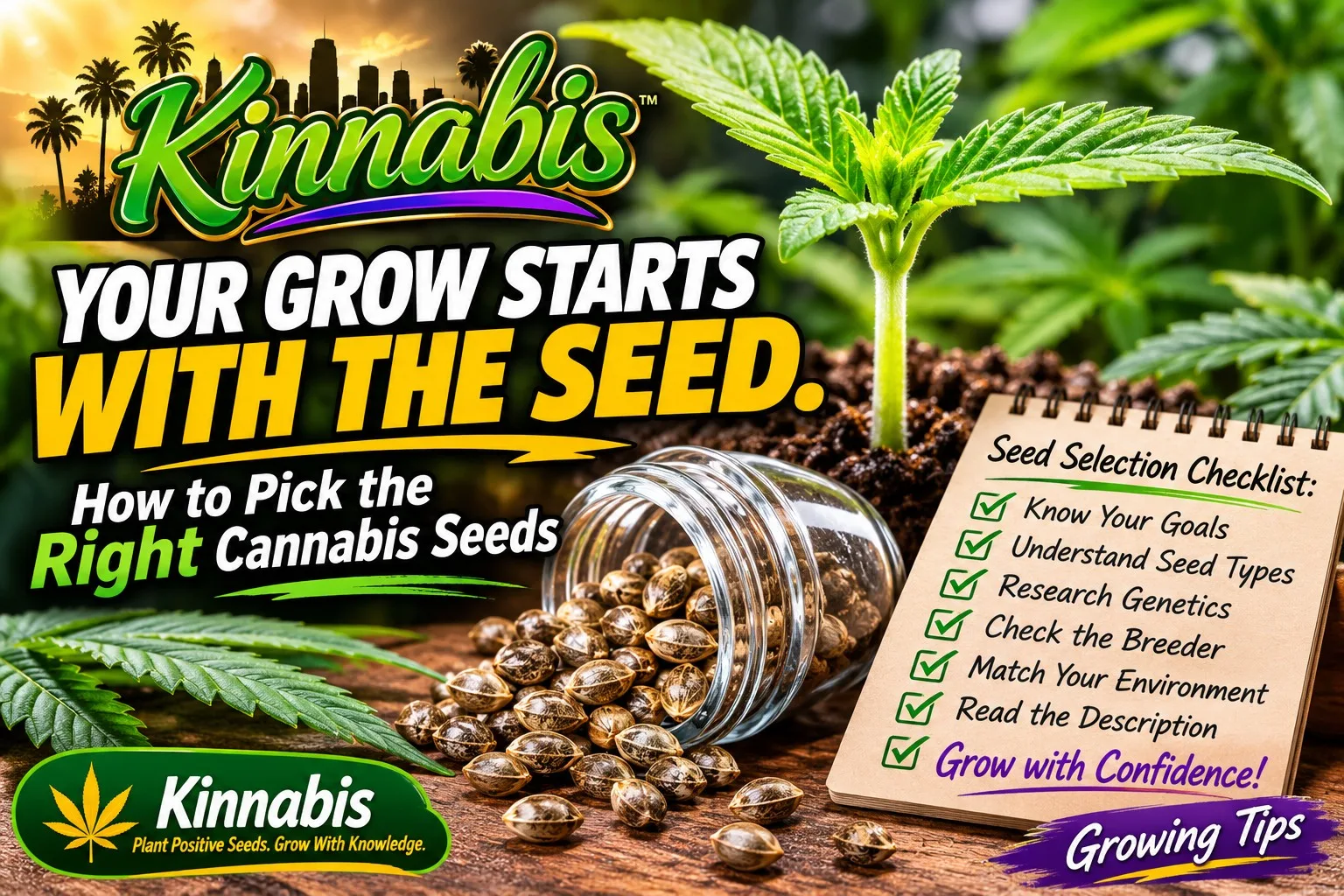
# How to Pick the Right Cannabis Seeds: A Grower’s Guide to Starting Strong
**The perfect grow doesn’t start with the perfect grow room. It starts with the right seed.**
Let’s talk about something that deserves a whole lot more attention: choosing your cannabis seeds.
You can invest in premium grow lights, dial in your temperature, master your watering schedule, fine-tune your nutrients, and spend countless hours learning advanced cultivation techniques. But here’s the reality: if you start with the wrong genetics for your growing goals, environment, or experience level, even the best growing techniques won’t magically turn that decision into the right one.
**Your genetics set the foundation. Your growing skills build upon it.**
Picking the right cannabis seed is one of the most important decisions you’ll make as a grower. Whether you’re a first-time cultivator or someone who’s been growing for years, understanding cannabis seed types, genetics, flowering characteristics, and growing requirements can make a tremendous difference.
So before you drop that seed into your growing medium, let’s make sure you’re starting with the right one.
Welcome to Growing Tips, Kinnabis style!
## 1. Know What You’re Growing: Indica, Sativa, or Hybrid?
One of the first things to understand when shopping for cannabis seeds is the difference between Indica, Sativa, and Hybrid genetics.
These classifications are commonly used throughout the cannabis industry to describe different genetic backgrounds and traditional plant characteristics. However, modern cannabis genetics are highly mixed, so these labels shouldn’t be treated as guarantees of a plant’s appearance, growth pattern, or effects.
Here’s a basic breakdown.
### Indica Genetics
Indica-dominant varieties are traditionally associated with shorter, bushier plants, broader leaves, and relatively compact growth structures.
**What growers should know:**
– Often have a more compact growth structure.
– May be suitable for growers working with limited vertical space.
– Some varieties have relatively shorter flowering periods.
– Can be useful when planning an indoor grow with height limitations.
### Sativa Genetics
Sativa-dominant varieties are traditionally associated with taller plants, narrower leaves, and more extended growth structures.
**What growers should know:**
– Some varieties can stretch significantly during flowering.
– May require more vertical growing space.
– Certain cultivars have longer flowering periods.
– Their growth patterns should be considered when planning an indoor setup.
### Hybrid Genetics
Hybrids combine genetics from different cannabis lineages. They’re extremely common in today’s seed market and can offer a wide range of growth characteristics.
**What growers should know:**
– Growth structure depends on the specific genetic combination.
– Some hybrids lean toward compact growth, while others stretch considerably.
– Flowering times and plant characteristics vary.
– Breeder information is particularly important when evaluating hybrid seeds.
**Kinnabis takeaway:** Don’t purchase a seed just because it says Indica, Sativa, or Hybrid. Look deeper into the actual cultivar and its documented characteristics. The genetic details tell a much better story than the label alone.
## 2. Choose the Right Seed Type: Feminized, Regular, or Autoflower?
Now we’re getting into the good stuff!
Not all cannabis seeds are created with the same growing characteristics. Understanding the different seed types can help you determine which genetics align with your cultivation goals.
### Feminized Cannabis Seeds
Feminized seeds are bred to produce female plants under typical growing conditions.
Why does that matter? Female cannabis plants are generally the plants growers select when their objective is flower production.
Things to consider:
– Designed to produce female plants.
– Available in photoperiod and autoflower varieties.
– Popular among growers who want to plan around flower-producing plants.
– Still require proper environmental conditions and genetic selection.
### Regular Cannabis Seeds
Regular cannabis seeds can produce male or female plants.
These seeds are especially relevant to breeders and growers interested in working with genetic diversity, selecting parent plants, and developing new crosses.
Things to consider:
– Can produce male or female plants.
– Useful for breeding and genetic preservation.
– Require sex identification when managing a mixed population.
– Offer opportunities for selecting and studying different phenotypes.
### Autoflower Seeds
Autoflowering cannabis seeds contain genetics that allow flowering to begin based primarily on plant age rather than a change in the light cycle.
Things to consider:
– Flowering is not triggered by the traditional photoperiod change.
– Generally have a more predetermined life cycle.
– Can have shorter overall seed-to-harvest timelines, depending on genetics.
– Their growth schedule and environmental requirements differ from photoperiod varieties.
**K-Bot’s takeaway:** Feminized, regular, and autoflower aren’t interchangeable labels. Each represents a different genetic or reproductive characteristic. Understand the difference before choosing.
## 3. Understand Your Growing Environment
Here’s where many growers make their first big mistake.
They fall in love with a particular strain, purchase the seeds, and only afterward start thinking about where the plant will grow.
That’s putting the cart before the grow tent!
Your growing environment should influence your seed selection.
### Indoor Growing
Indoor cultivation gives growers greater control over environmental conditions, including lighting, temperature, humidity, and available space.
When evaluating genetics for indoor environments, consider:
– Expected plant height.
– Growth structure and branching.
– Flowering duration.
– Environmental sensitivity.
– Available vertical and horizontal space.
A variety known for significant stretching may present challenges in a room with limited ceiling height.
### Outdoor Growing
Outdoor cultivation introduces a different set of considerations.
Sunlight, seasonal temperatures, humidity, rainfall, and local climate all influence how a cultivar performs.
When evaluating outdoor genetics, consider:
– Regional climate compatibility.
– Expected flowering window.
– Seasonal weather patterns.
– Mold and moisture susceptibility.
– Available outdoor space.
A strain that performs well in one region might struggle in another because environmental conditions are different.
**Kinnabis takeaway:** Don’t ask only, “Which strain do I like?” Ask, “Which genetics are compatible with the environment I’m working with?”
## 4. Pay Attention to Flowering Time
Flowering time is another important factor when selecting cannabis seeds.
Some varieties have relatively short flowering periods, while others take considerably longer to mature.
Why should you care?
Because flowering duration affects your overall cultivation timeline and, particularly with outdoor photoperiod plants, can influence whether a variety is suitable for your growing season.
Before choosing your seeds, research:
– Estimated flowering time.
– Whether the stated timeline refers to flowering or the entire life cycle.
– Whether the plant is photoperiod or autoflowering.
– Regional climate considerations for outdoor cultivation.
– Whether the breeder’s information is based on documented testing.
Remember that flowering estimates are guidelines, not guarantees. Actual development can vary depending on genetics and environmental conditions.
## 5. Research the Breeder, Not Just the Strain
This one deserves a little extra attention.
A beautiful strain name and an attractive product description can grab your attention, but the breeder behind those genetics deserves just as much consideration.
Cannabis breeding takes knowledge, patience, selection, and consistency. Reputable breeders invest time into developing and evaluating their genetic lines.
Before purchasing, investigate:
– Who developed the genetics?
– Is the breeder established?
– Are parent genetics clearly identified?
– Does the breeder provide flowering information?
– Are growth characteristics documented?
– Are there credible grower reports?
– Is the seed bank transparent about its breeder relationships?
Look for breeders who provide meaningful information rather than simply throwing around impressive marketing words.
A little research today can save a lot of disappointment later.
**Kinnabis tip:** We believe education starts with knowing what you’re buying. Explore breeder profiles, learn about their breeding philosophy, and get familiar with the genetics behind the names.
## 6. Don’t Chase THC Percentages Alone
Let’s clear up another common misconception.
A high advertised THC percentage doesn’t automatically mean a strain is the best choice for every grower.
Cannabis quality involves much more than one laboratory number.
Consider the bigger picture:
– Genetic stability.
– Cannabinoid profile.
– Terpene profile.
– Plant structure.
– Flowering characteristics.
– Documented cultivation performance.
– Your personal goals and preferences.
Terpenes contribute to the aroma and flavor characteristics associated with different cannabis cultivars. Genetics can influence these characteristics, although environmental factors also play a role.
A grower interested in citrus-forward aromas, for example, may prioritize a completely different genetic profile than someone looking for earthy, spicy, or fuel-like aromatic characteristics.
Don’t let a big THC number distract you from the rest of the genetic package.
## 7. Consider Your Experience Level
Not every cannabis variety is equally forgiving.
Some genetics may be more sensitive to environmental fluctuations, while others have characteristics that make them more manageable under a wider range of conditions.
If you’re a beginner, consider looking for:
– Clearly documented growing characteristics.
– Predictable flowering information.
– Manageable plant structure.
– Reliable breeder information.
– Cultivars with credible grower feedback.
Experienced growers may be interested in exploring more demanding genetics, unusual phenotypes, breeding projects, or varieties with specialized environmental requirements.
There’s nothing wrong with challenging yourself. Just make sure the challenge matches your knowledge, equipment, and available resources.
**Grow smart, not just ambitious.**
## 8. Read the Strain Description Carefully
Don’t skim the product page and head straight for the checkout button!
A good strain description should help you understand what you’re purchasing.
Pay attention to the following details:
| Information | Why It Matters |
|—|—|
| Genetics / Parent Strains | Helps you understand the cultivar’s background |
| Seed Type | Identifies feminized, regular, or autoflower characteristics |
| Genetics Classification | Provides an indication of its genetic lineage |
| Flowering Time | Helps estimate the flowering timeline |
| Plant Height | Helps evaluate space requirements |
| THC Information | Provides reported cannabinoid information |
| Terpene Profile | Helps describe aromatic characteristics |
| Indoor / Outdoor Suitability | Provides environmental guidance |
| Breeder | Identifies the source of the genetics |
If important information is missing, don’t be afraid to do additional research.
An informed grower is a better-prepared grower.
## 9. Avoid These Common Seed-Buying Mistakes
Let’s save you from a few headaches before they happen.
**Mistake #1: Buying based on the name alone.**
A catchy strain name doesn’t tell you everything about its genetics or growing characteristics.
**Mistake #2: Ignoring your environment.**
A variety that requires more space, a longer season, or specific environmental conditions may not be compatible with your setup.
**Mistake #3: Chasing the highest THC percentage.**
Potency is only one characteristic. Consider the complete genetic profile.
**Mistake #4: Ignoring flowering time.**
Your available growing season and cultivation timeline matter.
**Mistake #5: Overlooking the breeder.**
Know where your genetics come from. Research the people behind the seeds.
**Mistake #6: Choosing something beyond your experience level.**
Ambition is great. Preparation is better.
**Mistake #7: Confusing marketing claims with proven characteristics.**
Look for credible documentation and independent grower experiences. A product description is not the same thing as a guarantee of performance.
## 10. Your Seed Selection Checklist
Before making your next seed purchase, run through this quick checklist.
– [ ] Do I understand the strain’s genetic background?
– [ ] Have I selected the correct seed type?
– [ ] Is the cultivar compatible with my growing environment?
– [ ] Do I understand its estimated flowering time?
– [ ] Have I researched the breeder?
– [ ] Have I reviewed its documented growth characteristics?
– [ ] Does it match my experience level?
– [ ] Have I considered the complete cannabinoid and terpene profile?
– [ ] Am I purchasing from a reputable seed source?
If you can confidently answer these questions, you’re already making a more informed decision.
## Final Thoughts: Great Grows Begin With Great Genetics
Here’s something every grower should remember:
**You can improve your growing techniques, upgrade your equipment, adjust your environment, and learn new cultivation methods. But you cannot change the genetic blueprint of the seed you started with.**
That doesn’t mean genetics determine every outcome. Environmental conditions, cultivation practices, and proper care all matter. But your starting genetics establish the foundation upon which everything else is built.
So take your time. Research the breeder. Understand the strain. Know your environment. Choose seeds that align with your goals.
And remember, the smartest growers aren’t necessarily the ones with the biggest grow rooms or the most expensive equipment.
They’re the ones who understand what they’re growing and why they chose it.
At Kinnabis, we believe education is part of the growing journey. We’re here to help growers make informed decisions, discover quality genetics, and keep learning along the way.
**Plant positive seeds. Grow with knowledge. Stay rooted.**
That’s the Kinnabis way. 🌱
—
*Disclaimer: Cannabis laws vary by location. Always understand and follow applicable local and state regulations before purchasing or cultivating cannabis. This educational article is intended for adults and does not replace breeder-specific documentation or professional agricultural guidance.*


